Autopilot: The Machine Judges, Someone Answers
In 1914, over the Seine, Lawrence Sperry let go of the controls, and his plane kept flying on its own. Today, artificial intelligence is starting to do whole jobs with no one touching it. To sell them, it still needs what that plane already had: someone on board to answer for them.


Sequoia’s Julien Bek explained very clearly why AI companies can now sell the work, and not just the tool: the models have learned to judge. He’s right. But for anyone to buy that work, there’s a missing piece the model can’t supply: someone to answer for it if it goes wrong.
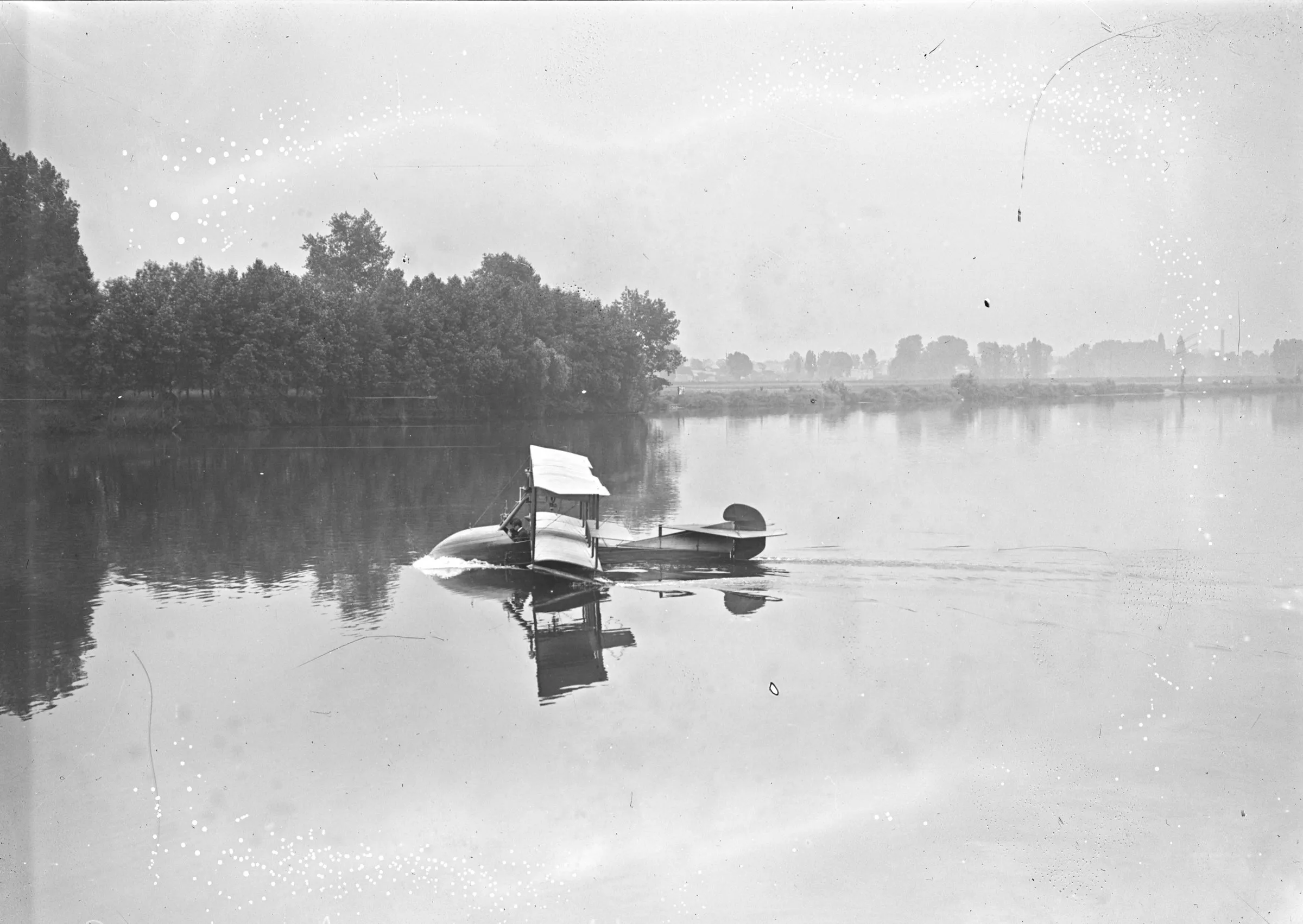
On June 18, 1914, a jury was watching the sky from the bank of the Seine at Bezons, just outside Paris. It was an air safety contest: the prizes went to the planes that were hardest to crash. Aviation needed it. Planes were barely ten years old, and they crashed often.
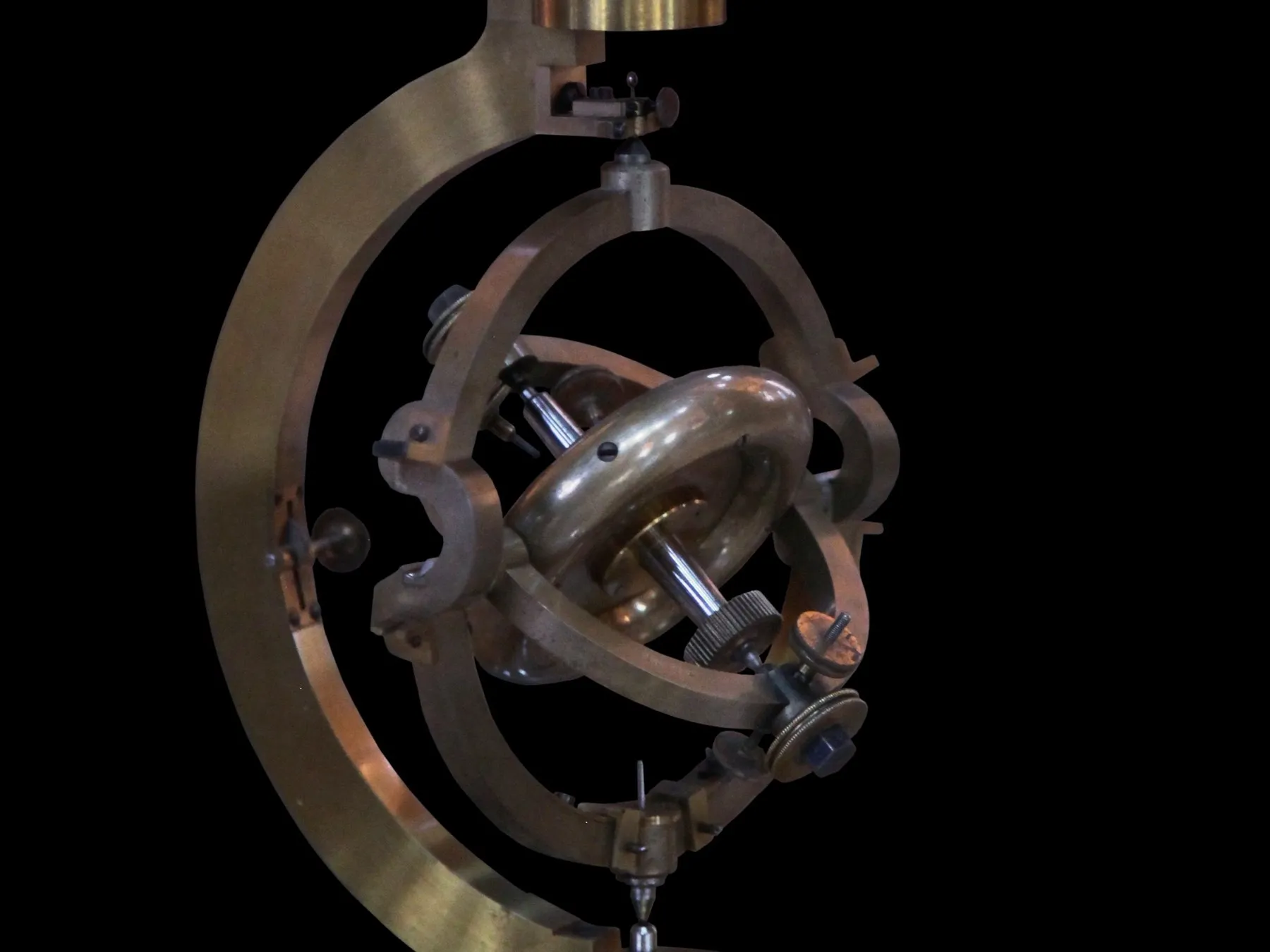
That day, a seaplane flew past, piloted by Lawrence Sperry, a 21-year-old American. He had brought an invention of his father’s, made with four gyroscopes, to keep the plane level. A gyroscope is a heavy wheel that spins very fast and, like a top, resists being tilted. If the plane leaned to one side, the gyroscopes sensed it and moved the controls on their own to bring it back level.1
About 300 feet above the river, Sperry stood up in the cockpit and raised both arms. He wanted the jury to see clearly that he wasn’t touching anything. At the same time, his mechanic, Émile Cachin, left his seat and walked out along the wing. With a man’s weight on one side, the plane should have tilted.
It stayed level, with no one at the controls.2
More than a century later, passenger planes almost always fly that way. A study by Cranfield University, in England, looked at a year of flights by an Airbus fleet. The average flight lasted just over an hour. On 95 of every 100 flights, the pilots flew by hand for less than seven and a half minutes.3
The plane already flies itself.
But someone still answers for it.
No passenger plane takes off without a pilot in command. The rules of the air say so in a phrase that could have been written for Sperry: the pilot in command answers for the aircraft “whether manipulating the controls or not.”4
This year, the word “autopilot” moved from planes to companies. In March, Julien Bek of Sequoia published “Services: The New Software.” His idea fits in two sentences: “A copilot sells the tool. An autopilot sells the work.”5
The copilot is a tool that helps professionals: lawyers to draft, accountants to balance the books. The autopilot hands the client the finished work: the contract drafted, the books closed. For Bek, that’s where the next big business lies. The next trillion-dollar company, he writes, will be “a software company masquerading as a services firm.”
And why only now? Bek explains it by separating two things a job asks for. One is following rules, even hard ones: writing code, for example. He calls that intelligence. The other is knowing what’s worth doing: what to build next. He calls that judgment. It isn’t in any manual. It takes experience and good taste.
Until recently, the models were still learning, and the sensible thing was a copilot: the machine helped and the professional decided. Today, in professions that are mostly rules, the models are already good enough to deliver the whole job. The ones that call for more judgment will come later. “Today’s judgement will become tomorrow’s intelligence,” he writes.
Bek’s article is excellent, and above all very clear. With a single distinction, between intelligence and judgment, he explains why this is happening now. Without judgment, a machine can only help whoever does the work. With judgment, it can start doing the work itself.
Still, one thing is missing: who answers for the work. When Bek describes the copilot, he spells it out: the professional uses the tool, and “they take responsibility for the output.” When he describes the autopilot, he says that “the customer is buying the outcome directly.” There, the question of who answers is left open.6
Weeks later, in an interview with Fortune, Bek made clear that his autopilot doesn’t fly entirely on its own. As on planes, the reporter wrote, a human is still there monitoring, ready to step in if something goes wrong. In the same piece, the reporter relays another of Bek’s ideas. Some companies hire a consulting firm, among other reasons, to have someone else to blame if the decision turns out badly.7
Here Bek comes close to the missing piece. A pilot in command watches, and also answers for the flight, even without touching a thing.
For anyone to buy a machine’s work, the machine has to know how to judge. That’s the part his article explains, and technology is solving it fast. But someone also has to answer for its judgments. And the machine can’t supply that, because to answer is to risk losing something, and a machine has nothing to lose.
At bottom, every autopilot needs the same thing as a plane: a pilot in command.
- ConceptThe pilot-in-command rule
- Every job a machine does needs someone to answer for it, whether they touch it or not. Without that person, or that company, the work can be done, but it can’t be sold.
For the autopilot Bek describes to arrive sooner, one question has to be answered. It’s the one anyone asks before paying for something: if it goes wrong, who do I complain to?
Almost always, the answer is obvious. If the plumber leaves a leak, they come back to fix it. If the bank overcharges you, it gives you the money back. But if a machine did the work, on its own, who do you complain to? Today that question has no clear answer. And work with no one to complain to can be done, but it can’t be sold.
On planes, the question is shorter: who is on board? And it has a history. Before AI, technology had already changed the answer twice.
Three ways to sell a job
For most of history, the person who did a job and the person who answered for it were the same. The accountant decides how to close the year, and signs the balance sheet. The taxi driver picks the route, and if there’s a crash, the driver is the one who answers. That’s why we never had to ask who answers: the answer came with the job.
Technology pulled them apart bit by bit. First it helped the person. Then it connected them with their customers. Now it is starting to replace them, and that is truly new: for the first time, whoever does the work can’t answer for it. With each step, what was being sold changed:
- The tool. A person judges, and that same person answers. The software helps them work faster. It’s the copilot.
- The platform. A person still judges, but the company that connects them with the customer starts to answer. That’s how Uber and Airbnb became services, between 2011 and 2014.
- The autopilot. The machine judges, but it can’t answer. Someone has to do it in its place, and it isn’t clear yet who: the company that puts it to work, the one that makes it or an insurer.
All three stages needed the same things. A technology that made the leap possible: the personal computer, the phone with GPS, the model that judges. And someone willing to answer for whatever came of it. Technology opens the door. Answering is what turns the leap into a business.
The copilot
Bek gives an example with numbers. A company might spend $10,000 a year on QuickBooks, an accounting program, and $120,000 on the accountant who closes the books.5 That’s the business Bek sees: far more is spent on the work than on the tool.
There’s more to the example if you look at what that difference pays for. It pays for the accountant’s hours and judgment, of course. And it pays for their signature. If the balance sheet is wrong, the accountant answers for it, with their name and their license.
That’s the deal a tool offers, and it explains why tools come cheap. The software does what it’s asked, and whatever comes out is on whoever uses it. Many programs say so in their license, in capital letters: they are provided “AS IS,” without warranty of any kind.8 It isn’t bad faith. It’s what’s being sold: a tool, not a result.
AI copilots strike the same deal, with more intelligence. Harvey helps lawyers draft, and they still sign whatever comes out. Rogo does the same with investment banks.5 They get smarter every month, and the deal doesn’t change: the machine helps, the person answers.
That’s also how the New York Times saw Sperry’s invention, four days after Bezons. The stabilizer wouldn’t make the flying machine “fool proof,” the paper wrote, but it would “vastly relieve the strain on the careful and experienced aviator.”9
Today that invention is remembered as the first autopilot. For the paper, it was a copilot: an aid to the pilot, who stayed in command.
Nobody took the wheel from the driver
The obvious comparison is with Uber and Airbnb. Around 2010, software stopped selling tools and started selling services. The same will happen with AI.
Marc Andreessen made the comparison in March, on David Senra’s podcast. By the old logic, he said, Uber would have been “just taxi dispatch software,” and Airbnb “boutique booking hotel software.”10 But they sold the ride and the stay. In 2025, Y Combinator proposed the same thing with AI. Instead of selling software to a law firm, start your own law firm and compete with the existing ones.11
The comparison is a good one, and it tells half the story well: the technology that made Uber and Airbnb possible. The other half is the moment they became answerable.
Uber doesn’t drive: the driver does, choosing the route, braking and deciding who gets in. Airbnb doesn’t host anyone: the homeowner does. Judgment stayed in human hands. The technology brought other things. The phone with GPS, to watch the car come toward you on a map. Payment inside the app, with no cash. And the ratings that passenger and driver, guest and host, give each other, so you can trust a stranger.
That was enough for good software. A service still needed someone to answer for it, and that showed in the summer of 2011.
A San Francisco woman came home from a trip and found her apartment ransacked and trashed. She had rented it to a stranger through Airbnb. She wrote about it on her blog, which she signed EJ. A month later, the story went viral, with a detail that outraged many: when something like that happened, Airbnb paid nothing.
Within days, Brian Chesky, Airbnb’s CEO, published a letter. “We let her down,” he wrote. Starting that month, the company would pay up to $50,000 for damage to a host’s home. The next year, the guarantee rose to $1 million, backed by Lloyd’s, the London insurance market.12
That summer, Airbnb climbed on board. It no longer sold just a way to book. It sold a promise: if something goes wrong in your home, we answer for it.
Uber got to the same place by another road: it was forced to. In September 2013, California created a legal category for companies like Uber. And it required them to carry insurance of at least $1 million per accident.13
Three months later, in San Francisco, a driver who worked with Uber hit and killed a six-year-old girl, Sofia Liu. It was New Year’s Eve. The driver had the app open and was waiting for a ride. Uber said that, at the time, the driver “was not providing services on the Uber system.” But within a few months, Uber began covering that waiting time too. Since 2015, a California law has required it.14
In Europe, Uber argued it was just an app connecting drivers with passengers. In 2017, the Court of Justice of the European Union said otherwise: what Uber sells is transportation. And each country can hold it to the same rules as any transportation company.15
In both stories, technology made the leap possible. But the service was born later, when the company climbed on board: Airbnb, pushed by the scandal, and Uber, by the law. The wheel was never theirs: it stayed with the driver and the homeowner. What changed was who answered if something went wrong.
This time the machine judges
What AI brings is genuinely new: the one judging is a machine. At Uber, a person drove, and that person could make mistakes, but could also answer for them. Now a model decides which clause goes into a contract, or how to reply to an angry customer.
And it decides better all the time. On GDPval, OpenAI’s test with real tasks from 44 occupations, the company’s best model now matches or beats the expert in more than four out of five comparisons.16
Judgment is arriving, and fast. What doesn’t arrive with it is someone to answer for the work.
The most cited case is Air Canada’s, from 2024. Jake Moffatt had to fly from Vancouver to Toronto because his grandmother had died. The airline’s chatbot told him he could ask for the bereavement fare after the trip. It wasn’t true: Air Canada’s rules didn’t allow it.
Moffatt asked for the refund, and the airline said no. According to the ruling, its defense amounted to saying the chatbot was “a separate legal entity that is responsible for its own actions.” In other words, let the machine answer for itself.
The tribunal rejected it. The chatbot is part of Air Canada’s website, it said, and the airline answers for everything its website says. “It makes no difference whether the information comes from a static page or a chatbot.” Air Canada had to pay him 812 Canadian dollars.17
The amount is small. The decision isn’t. Air Canada wanted its machine to fly with no one on board, and the tribunal put the airline on board.
Promising with something at stake
Why can’t a machine answer for itself, when its judgment keeps getting better? Because being responsible takes something else, and the word itself says so.
“Responsible,” like “respond,” comes from the Latin respondere, which at first meant to promise something in return. Inside it sits another verb, spondere: to promise solemnly.18
In Rome, the oldest contract was sealed with a question and an answer. One person asked: Spondes? Do you promise? The other replied: Spondeo. I promise. No paper was needed: that one word bound him.19
But promising, on its own, can come free. Ovid, the Roman poet, gave lovers this advice: “Promise: what harm is there in promising? In promises, anyone can be rich.”20 Air Canada’s chatbot promised a refund. The promise cost it nothing.
To be answerable is to promise with something at stake. It means being tied to what you said or did, and having something to lose if it goes wrong. The accountant answers with their license. The driver, with their insurance. Airbnb, with its money.
A machine can reply all day, and it keeps getting better at it. What it doesn’t have is something to lose: no money to pay with, no license that can be taken away, no name that can be tarnished. You can switch it off, but switching it off gives nothing back to anyone. That’s why the tribunal in Canada did the only thing it could: it looked for someone who did have something to lose.
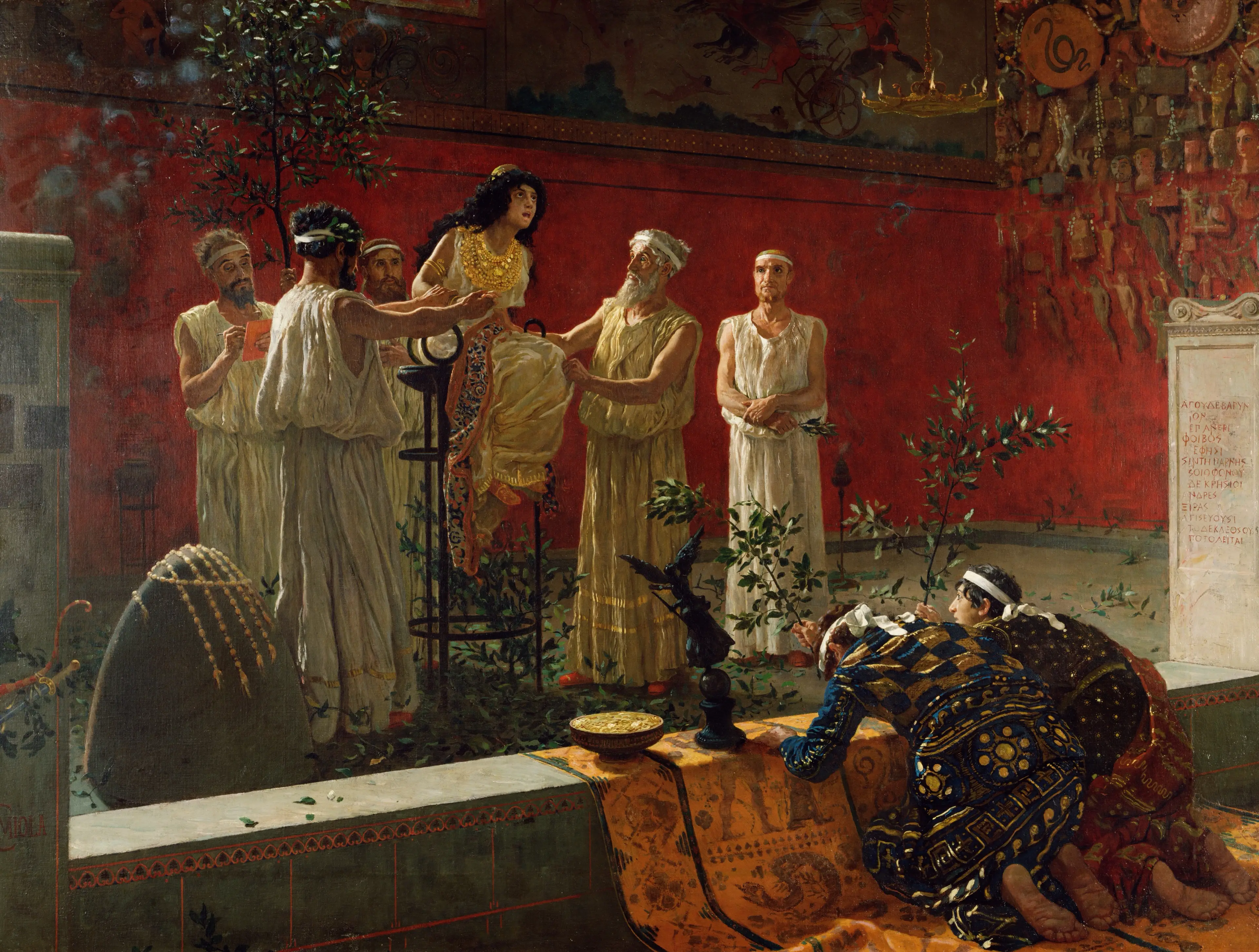
Answering for what someone else does is nothing new. The law has a rule for it, and the rule was born at sea. In Rome, if a ship’s captain made a deal, the owner who had put him in command answered for it. It made no difference who the captain was, wrote the jurist Ulpian. Whoever put him in command answers for everything he does, “otherwise those who contract with him would be deceived.”21 It’s almost what the tribunal in Canada said about the chatbot, eighteen centuries later.
Around 1700, the English judge John Holt gave the rule its simplest reason. A merchant had an agent, and the agent swindled a customer. Since somebody has to lose, Holt reasoned, it makes more sense for the loser to be the one who trusted the agent, and not a stranger. Lawyers sum it up in Latin: respondeat superior, let the one above answer.22
AI falls under that rule: whoever puts it to work answers for it. But the rule was made for people. An employee gets things wrong with one customer at a time. A model can repeat the same mistake in a thousand conversations at once, or make one that would never have occurred to a person. That’s why answering for a machine costs more than answering for a person. And that cost decides who dares to go on board.
Who climbs on board
If the machine can’t answer for itself, someone has to answer for it. And some are already climbing on board.
Some put their name on the line. In 2025, the regulator for solicitors in England and Wales authorized the first AI-driven law firm: Garfield.Law. It helps small businesses collect unpaid debts of up to £10,000. The authorization came with conditions. Named solicitors answer for everything the system does, and the system takes no step without the client’s approval.23 The machine does the work. Behind it are people with their names on the solicitors’ register.
Others put money on the line, the oldest way of answering. In 2025, a company called Armilla began selling insurance against AI mistakes. Behind it are insurers at Lloyd’s, the same market that backed Airbnb’s guarantee. The policy covers the losses a chatbot causes when it performs worse than promised. For example, if it used to be right 95% of the time and drops to 85%. According to Armilla, its policy would have covered Air Canada, provided it could be shown that the chatbot was performing below expectations.24
In Europe, the law will put the manufacturer on board. Starting December 9, a European Union directive treats software, AI included, like any other product. If it has a defect and harms a person, the manufacturer answers for it, even if it wasn’t at fault. Just like the maker of a toaster that catches fire. But only for some kinds of damage: an injury, a broken object, lost data. It leaves out services and information.25 The refund Air Canada promised by mistake isn’t covered. Neither is the finished work an autopilot sells.
And some companies sell the work and choose to answer for it. I know this up close, because it’s what we do at Sapio, my company. We run parts of other companies with AI: we look after their customers, book appointments, collect payments. Our website says we answer for the result. In practice, if the agent gets something wrong, we catch it, fix it and tell the client. And we don’t charge for what fails through our fault. It’s a small way of being on board: if it goes wrong, we’re the ones who lose.
The cost of answering
The rule has a practical consequence. Selling a machine’s work takes two things: that it judges well, and that someone answers for it. So the autopilot will arrive first where both are true: where the machine already judges well and, on top of that, answering for it is cheap.
Answering is cheap when a mistake costs little, shows up fast and can be undone: a standard NDA, a small debt, a booked appointment. It gets expensive when the mistake is big, slow to surface or impossible to undo: the signature on an audit, a medical diagnosis, a defense at trial. It’s no accident that the first AI law firm was authorized to collect small debts, and not to defend anyone.
That’s how the autopilot will advance: first where answering is cheap, then where it’s expensive.
- ConceptThe cost of answering
- What it costs to take responsibility for a job if it goes wrong: how much can be lost, how fast the mistake shows up and whether it can be undone. It’s low for a small debt and high for a diagnosis.
Judging and answering also move at very different speeds. What models can do improves every few months. How far anyone dares to answer for them moves slowly, and it’s still not far. A refund of 812 Canadian dollars. Debts of up to £10,000. A policy that pays if the chatbot performs worse than promised. And the autopilot moves at the pace of the slower one, which is answering.
Bek ranks professions by how much intelligence and how much judgment they call for. The rule adds another question: how much it costs to answer for them. On tax advisory, for example, Bek writes that 80 to 90% of the underlying work is intelligence. What protects the business, he says, is the CPA license: a regulatory moat.5
He’s right. And the license protects something else: it tells the client who answers for the work. To get in there, it isn’t enough for the machine to be smarter. Someone has to offer the client another way of answering, one worth as much as the accountant’s signature.
So the race won’t go only to whoever has the smartest model. It will also go to whoever learns to answer more cheaply: to spot the mistake before the client does, to put a price on it and to give back whatever has to be given back. It’s less glamorous work than training models. In aviation, it was done for a century by insurers, regulators and pilots.
As Bek predicts, the next trillion-dollar company will be a software company masquerading as a services firm. Under the mask, it will be part insurer.
On board
From those days at Bezons, one scene remains: the plane level over the river, the mechanic on the wing and Sperry on his feet, arms raised. It’s told as proof that the machine could already fly on its own. And it was.
But the scene shows something else, so obvious that hardly anyone mentions it: Sperry was on board. If the gyroscopes failed, he was the one who would fall into the Seine. That’s why he convinced the jury. The man asking to be believed was risking his neck.
And something did fail. In the second trial, five days later, the mechanic was climbing back from the wing to his seat. He accidentally touched the anemometer, the instrument that measures airspeed. The plane began to descend. “Mr. Sperry had to take the controls again to climb back up,” the newspaper L’Intransigeant reported.26 His hands were never far from the controls. When they were needed, they went back.
What’s coming looks different. No one will be standing in the cockpit. A machine will close a contract at three in the morning, turn down a refund or book an appointment while everyone sleeps. It will almost always go well, and it will only get better. For when it doesn’t, someone has to be on board anyway, even without touching a thing: a person with their name, a company with its assets, an insurer with its capital.
The autopilot Bek describes has already taken off. But no one buys work from a machine. People buy it from whoever is on board.
References
-
John Jay Ide, “The Sperry Gyroscopic Stabilizer,” Scientific American, August 8, 1914, p. 96 (Internet Archive): “The apparatus proper consists of a group of four gyroscopes arranged in two pairs […] In normal flight the gyroscopes keep the axes of the rings strictly horizontal and vertical so that the slightest tipping of the aeroplane in any direction is instantly corrected through the servo-motors.” The controls were moved by two compressed-air motors, and the gyroscopes “weigh only two pounds each and turn at 12,000 revolutions per minute.”
-
The trials took place at Bezons on June 18 and 23, 1914 (L’Aérophile, July 15, 1914, jury report). The New York Herald, Paris edition, June 19, 1914, p. 3: “Mr. Sperry’s mechanic, E. Cachin, left his seat and climbed out a considerable distance on to the aeroplane’s wings, while at the same time Mr. Sperry stood up in the machine with his hands above his head.” René Quinton, who flew as a passenger on the 23rd, in Le Matin, June 24, 1914: “Le pilote se lève en même temps et tend les deux bras vers le ciel, afin de bien montrer qu’il ne touche à aucune commande.” The height and the distance come from L’Auto, June 19, 1914, p. 3: “à quelques 100 mètres de haut, le mécanicien quitte son siège, s’écarte du centre de l’appareil d’au moins 1 m. 50 en marchant sur les ailes.” The same paper reports that Sperry then took up Major Barès and Navy Lieutenant Cayla, and Flight (July 3, 1914, p. 712) explains why: “in order to make absolutely certain that the pilot did not use the controls.” The contest was organized by the Union pour la sécurité en aéroplane, which on July 3 awarded “50.000 francs à The Sperry Gyroscope Co pour son stabilisateur gyroscopique” (L’Aérophile, p. 326); the grand prize, 400,000 francs, went unawarded (Le Génie civil, July 25, 1914). The same L’Aérophile introduces the father, Elmer Sperry, as “inventeur du stabilisateur Sperry.” Translations from the French are mine.
-
David Barry, “How long do pilots really spend on autopilot?”, Cranfield University blog, February 13, 2018. The sample: a year of data from a fleet of Airbus A319s, “around 14,000 flights,” with an average time in the air of “just under 72 minutes.” The result: “95 per cent of flights had less than 440 seconds (seven minutes, 20 seconds) of manual flying.”
-
International Civil Aviation Organization, Annex 2 to the Chicago Convention, Rules of the Air, 2.3.1: “The pilot-in-command of an aircraft shall, whether manipulating the controls or not, be responsible for the operation of the aircraft in accordance with the rules of the air.” The European Union has the same rule, SERA.2010 of Implementing Regulation (EU) No 923/2012: “The pilot-in-command of an aircraft shall, whether manipulating the controls or not, be responsible for the operation of the aircraft in accordance with this Regulation.” In the United States, 14 CFR 91.3: “The pilot in command of an aircraft is directly responsible for, and is the final authority as to, the operation of that aircraft.”
-
Julien Bek, “Services: The New Software”, Sequoia Capital, March 5, 2026. The exact words: “The next $1T company will be a software company masquerading as a services firm”; “A copilot sells the tool. An autopilot sells the work.”; of the copilot, “The professional is the customer, the tool makes them more productive, and they take responsibility for the output”; of the autopilot, “The customer is buying the outcome directly”; “Writing code is mostly intelligence. Knowing what to build next is judgement.”; “Today’s judgement will become tomorrow’s intelligence”; “A company might spend $10K a year for QuickBooks and $120K on an accountant to close the books”; and on tax advisory, “CPA licensing creates a regulatory moat, but 80-90% of the underlying work is intelligence.” Who answers for the work isn’t the article’s subject: responsibility appears only once, in the definition of the copilot.
-
Others noticed it too. Five days after the article, Nikhil Gupta wrote that the customer of a service isn’t buying only the outcome: “They’re buying the signature” (“The Accountability Wrapper”, March 10, 2026). yage.ai made the same point on April 5, and so did Quentin Dupard, in “Selling the work”, on August 28.
-
Jeremy Kahn, “Are services the new software?”, Fortune, April 21, 2026. It’s the reporter’s paraphrase, not a quote from Bek: in his autopilot, as on planes, “a human is still there monitoring the systems and handling the hardest tasks (like take off and landing) and ready to step in if something goes wrong.” The consulting idea, also paraphrased: “management consulting, which exists in part to provide external validation of decisions management already wanted to take […] and, cynically, so that there is someone else to blame if it turns out to be a bad decision.”
-
For example, the MIT license, one of the most widely used in free software: “THE SOFTWARE IS PROVIDED ‘AS IS’, WITHOUT WARRANTY OF ANY KIND” (Open Source Initiative).
-
The New York Times, editorial, June 22, 1914: “That won’t make the flying machine ‘fool proof,’ though the enthusiastic inventor says so, but it will vastly relieve the strain on the careful and experienced aviator.”
-
David Senra, interview with Marc Andreessen, March 15, 2026, from the transcript on the site: “Silicon Valley between, call it 1950 to 2010, was primarily just in the tools business”; “alternate universe Airbnb is just boutique booking hotel software”; and “Uber and Lyft in the old world were just taxi dispatch software. In the new world, they’re full transportation providers.” Andreessen had already said the same about Airbnb in 2016 (Fortune, October 3, 2016).
-
Jared Friedman, “Full-stack AI Companies,” in Y Combinator’s Requests for Startups of May 2025 (ycombinator.com/rfs): “You could build an AI agent and sell it to law firms. That’s what most people do. Or, you could start your own law firm, staff it with AI agents, and compete with the existing law firms.” In its Winter 2026 batch, Y Combinator picked at least three law firms built with AI (Artificial Lawyer, February 4, 2026).
-
EJ’s post, “Violated: A traveler’s lost faith, a difficult lesson learned,” is from June 29, 2011. The story blew up on July 27, with Michael Arrington in TechCrunch: “It turns out that when something like this happens, Airbnb isn’t financially responsible.” Brian Chesky’s letter, “Our Commitment to Trust & Safety,” is from August 1, 2011: “With regards to EJ, we let her down, and for that we are very sorry” (TechCrunch). The $1 million guarantee with Lloyd’s was announced on May 22, 2012 (The Next Web). The guarantee covered damage to the host’s property, and Airbnb made clear it wasn’t insurance; liability insurance came in 2015.
-
California Public Utilities Commission, Decision D.13-09-045, September 19, 2013: “TNCs shall maintain commercial liability insurance policies providing not less than $1,000,000 (one million dollars) per-incident coverage for incidents involving vehicles and drivers while they are providing TNC services.” It was the same amount San Francisco required of taxi companies.
-
Uber’s statement of January 1, 2014: “The driver was not providing services on the Uber system during the time of the accident.” On March 14, Uber added coverage for the waiting time (Insurance Journal). California’s AB 2293 was signed on September 17, 2014, and has been in force since July 1, 2015 (text). Sofia Liu’s family reached a settlement with Uber in July 2015.
-
Court of Justice of the European Union, Case C-434/15, Asociación Profesional Elite Taxi v Uber Systems Spain SL, judgment of December 20, 2017: Uber’s service “must be regarded as being inherently linked to a transport service and, accordingly, must be classified as ‘a service in the field of transport.’” The ruling classifies the service without penalizing Uber: it leaves regulation to each country (§ 47).
-
OpenAI, “Measuring the performance of our models on real-world tasks”, September 25, 2025, and the technical paper: 1,320 tasks from 44 occupations in the nine sectors that contribute most to the US economy. The starting figures come from the public set of 220 tasks, graded blind by experts: GPT-4o matched or beat the professional on 12.4% of the tasks, and Anthropic’s Claude Opus 4.1, the best model at the time, on 47.6%. OpenAI reported the later ones when it presented each model, counted by comparison rather than by task: 70.9% for GPT-5.2 (December 2025), 83.0% for GPT-5.4 (March 2026) and 84.9% for GPT-5.5 (April 2026). In July 2026, OpenAI changed its measure and stopped reporting these percentages. On whole projects, the gains are smaller: Center for AI Safety and Scale AI, “Remote Labor Index: Measuring AI Automation of Remote Work”, October 30, 2025, with 240 real freelance projects that took a person 28.9 hours on average: “the highest-performing agent achieving an automation rate of 2.5%.” On Scale AI’s leaderboard, checked on November 9, 2026, the best model reaches 21%.
-
Moffatt v. Air Canada, 2024 BCCRT 149, Civil Resolution Tribunal of British Columbia, February 14, 2024, § 27: “In effect, Air Canada suggests the chatbot is a separate legal entity that is responsible for its own actions. This is a remarkable submission. While a chatbot has an interactive component, it is still just a part of Air Canada’s website. It should be obvious to Air Canada that it is responsible for all the information on its website. It makes no difference whether the information comes from a static page or a chatbot.” The order (§ 44): 650.88 Canadian dollars in damages, 36.14 in interest and 125 in tribunal fees, 812.02 in total.
-
Lewis and Short, A Latin Dictionary, entries spondeo (“to promise solemnly, to bind, engage, or pledge one’s self”) and respondeo (“to promise a thing in return for something else”).
-
The jurist Gaius describes it in the second century, and adds that it was reserved for Roman citizens: Institutes, III, 92–93 (The Latin Library): “Verbis obligatio fit ex interrogatione et responsione, uelut DARI SPONDES? SPONDEO […] Sed haec quidem uerborum obligatio DARI SPONDES? SPONDEO propria ciuium Romanorum est.”
-
Ovid, The Art of Love, I, 443–444: “promittas facito, quid enim promittere laedit? / pollicitis diues quilibet esse potest.” The advice is for anyone trying to win someone over: promising gifts costs nothing. The same lines were written on the frame of Jan van Eyck’s Arnolfini Portrait: they were copied down by Jakob Quelviz, a traveler from Leipzig who saw the painting in the Alcázar in Madrid in the summer of 1599 (National Gallery, the painting’s page, provenance). The frame no longer exists. The translation is mine.
-
Digest, 14.1.1.4 and 14.1.1.5, from Ulpian, On the Edict, book 28 (The Latin Library): “Cuius autem condicionis sit magister iste, nihil interest […] sed nec cuius aetatis sit, intererit, sibi imputaturo qui praeposuit” and “omnia enim facta magistri debeo praestare qui eum praeposui, alioquin contrahentes decipientur.” The translation is mine.
-
Holt’s words, in Hern v. Nichols (c. 1700), as reported by Salkeld: “seeing some Body must be a Loser by this Deceit, it is more Reason that he that employs and puts a Trust and Confidence in the Deceiver, should be a Loser than a Stranger.” The words respondeat superior already appear in an English statute of 1285, Westminster II, and the 1891 Black’s Law Dictionary renders them “Let the master answer.” The history of the rule is in the UK Supreme Court’s judgment in Mohamud v. WM Morrison Supermarkets (2016), §§ 12–17, which recalls that Holt began to build it in 1691, in the case of a ship owner sued for his captain’s negligence. The translation is mine.
-
Solicitors Regulation Authority, “SRA approves first AI-driven law firm”, May 6, 2025: “named regulated solicitors will still ultimately be accountable for the firm delivering high professional standards. This means they will also be responsible for all the system outputs and for anything that goes wrong”; “The system will not be able to propose relevant case law”; “Garfield is not autonomous and will only take a step where the client has approved it.” The £10,000 cap is reported by Legal Futures the same day.
-
Lee Harris, “Insurers launch cover for losses caused by AI chatbot errors,” Financial Times, May 11, 2025, reproduced by Armilla: “A mistake by an AI tool would not on its own be enough to trigger a payout under Armilla’s policy. Instead, the cover would kick in if the insurer judged that the AI had performed below initial expectations.” The 95% and 85% example and the point about Air Canada come from the company. The policies are underwritten by Lloyd’s insurers, Chaucer among them.
-
Directive (EU) 2024/2853 of October 23, 2024, on liability for defective products. Article 4 includes “software” in the definition of “product”; recital 13 names AI systems and makes clear that information is not a product, and recital 17 that the directive doesn’t apply to services as such. Only individuals can claim, for death or personal injury, for damage to their property or for the loss of data they didn’t use for work (Articles 5 and 6). It applies to products placed on the market from December 9, 2026 (Article 2). In 2025, the European Commission also withdrew its proposal for a separate directive on AI liability.
-
L’Intransigeant, June 25, 1914, p. 3, on the trial of the 23rd: “le mécanicien toucha par inadvertance l’anémomètre, et mit l’avion à la descente planée. M. Sperry dut reprendre les commandes pour remonter.” The translation is mine.